


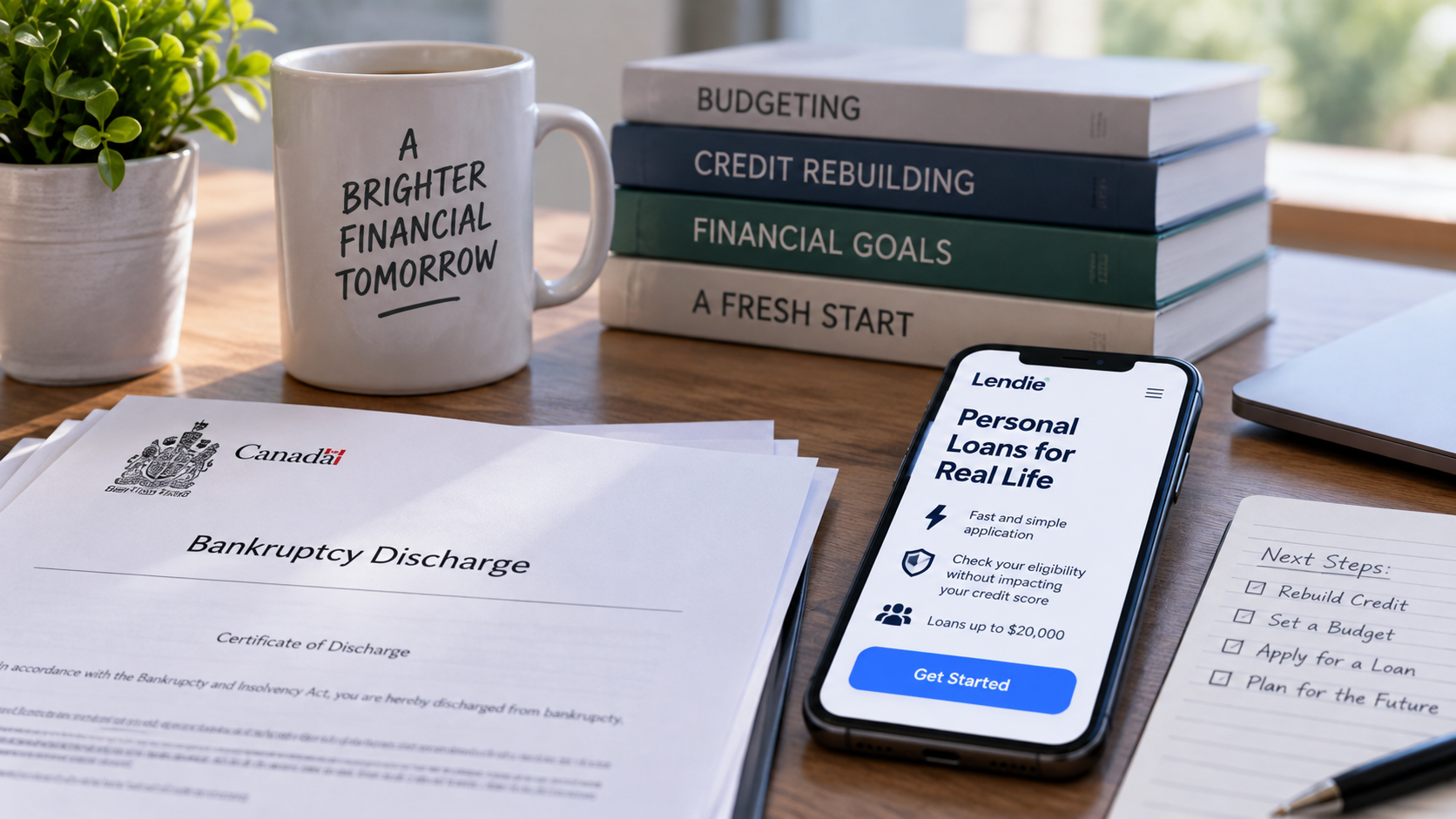
Getting approved for a personal loan after bankruptcy can be challenging, but bankruptcy does not mean you will never be able to borrow money again.
Once you have been discharged from bankruptcy, you can start rebuilding your financial profile and working toward qualifying for credit again. However, lenders will generally look closely at your income, existing debts, credit history and ability to make the required payments.
If you're looking for a personal loan after bankruptcy, the key is understanding what lenders consider, knowing what you can realistically afford and choosing financing that won't put you back into financial difficulty.
Key Takeaways
- Getting a personal loan after bankruptcy can be possible, but approval depends on your financial situation and the lender's requirements.
- A bankruptcy can remain on your credit report for several years after discharge, depending on your province and the credit bureau.
- Stable income, manageable expenses and responsible credit habits can help demonstrate that your financial situation has improved.
- You should compare the interest rate, payment amount, loan term and total repayment cost before accepting a personal loan.
- Lendie offers unsecured personal loans and allows you to check your eligibility without impacting your credit score.
Can You Get a Personal Loan After Bankruptcy?
Yes, it can be possible to get a personal loan after bankruptcy.
There is no rule that permanently prevents someone who has gone through bankruptcy from getting credit again. However, lenders will consider the bankruptcy when assessing your application, along with your current financial circumstances.
The Office of the Superintendent of Bankruptcy Canada explains that whether someone can obtain credit after discharge depends on their ability to demonstrate financial maturity and an ability to repay the debt. There are no guarantees that a lender will approve an application.
This means your financial situation today can be just as important as what happened in the past.
If you now have steady income, manageable expenses and a history of making your current payments on time, you may have more options than you did immediately after filing for bankruptcy.

How Long Does Bankruptcy Stay on Your Credit Report?
One of the biggest concerns for people looking for a personal loan after bankruptcy is how long the bankruptcy will remain on their credit report.
According to the Financial Consumer Agency of Canada, a first bankruptcy is generally removed from your credit report six years after discharge. In certain provinces, including Ontario, Quebec, Prince Edward Island and Newfoundland and Labrador, TransUnion may keep a first bankruptcy on file for seven years after discharge. A second bankruptcy can remain for 14 years.
The exact timing depends on your circumstances, province and credit bureau.
That doesn't mean you have to wait until the bankruptcy disappears before applying for credit. Some lenders may be willing to consider borrowers sooner, although the terms offered may be less favourable.
What Do Lenders Look At After Bankruptcy?
When you apply for a personal loan, lenders generally want to know whether you can afford to repay it.
Canada.ca says lenders commonly look at your credit report, credit score and existing debts when assessing a personal loan application. They may also require proof of regular income, a bank account and a permanent address.
Some of the factors that may be considered include:
Income
A steady source of income can help demonstrate that you have the ability to make your loan payments.
You may be asked to provide information about your employment and income as part of the application.
Current Debt
Your existing financial obligations matter because lenders need to determine whether another monthly payment is affordable.
If you're already struggling to keep up with your expenses, taking on another loan may not be the right solution.
Credit History
Your bankruptcy will be part of your credit history for a period of time, but lenders can also see how you've managed credit since the bankruptcy.
A history of making payments on time can help demonstrate that your financial habits have changed.
Ability to Repay
Ultimately, lenders need to determine whether the loan fits your financial situation.
Taking out a larger loan than you can comfortably afford can create another cycle of financial difficulty, so it's important to focus on the payment and total cost rather than simply the amount you're approved for.
Check Your Credit Report Before Applying
Before applying for a personal loan after bankruptcy, check your credit report.
Your credit report can help you understand what lenders will see when they assess your application. It can also help you identify outdated or inaccurate information.
Canada's two main credit bureaus are Equifax and TransUnion, and you can request your credit report and score through them. Checking your own credit report does not affect your credit score.
Look for:
- Incorrect personal information
- Accounts that should have been removed
- Incorrect payment information
- Duplicate accounts
- Unexpected collection accounts
- Credit inquiries you don't recognize
If you find an error, contact the appropriate credit bureau to have the information investigated.

Rebuild Your Credit Before Applying
If you're not in a rush to borrow, spending some time rebuilding your credit can improve your financial position.
The most important thing is establishing a consistent pattern of responsible borrowing.
This can include:
- Making all current payments on time
- Keeping credit card balances manageable
- Avoiding unnecessary credit applications
- Paying down existing debts
- Maintaining a realistic monthly budget
- Regularly checking your credit report
Canada.ca notes that payment history and responsible credit use are important factors in your credit profile. It also recommends limiting credit applications and only applying for credit when you need it.
You don't need to rebuild your credit overnight. Consistency matters.
Consider How Much You Actually Need
If you're approved for a personal loan after bankruptcy, resist the temptation to borrow more simply because you're eligible for it.
Start by determining exactly how much you need.
For example, if you need $5,000 to cover an unexpected expense, there may be little reason to borrow $15,000.
A smaller loan can mean a smaller monthly payment and less interest paid over the life of the loan.
Canada.ca also recommends being careful not to borrow more than you can afford to repay.
Compare the Total Cost of the Loan
The interest rate is important, but it shouldn't be the only number you look at.
Before accepting a personal loan, understand:
- Interest rate
- Loan amount
- Loan term
- Payment frequency
- Payment amount
- Total amount you'll repay
- Any applicable fees
- Early repayment terms
A longer loan term can make your individual payments smaller, but it can also increase the total amount of interest you pay.
For example, Canada.ca's personal loan examples show how significantly the total repayment cost can change as the interest rate increases.
If you're comparing multiple offers, look at the total cost of borrowing rather than choosing whichever option has the lowest monthly payment.
What If You Need a Personal Loan Immediately After Bankruptcy?
Some people need access to money before they've had years to rebuild their credit.
An unexpected repair, emergency expense, necessary purchase or other financial situation may require borrowing sooner rather than later.
In this situation, don't assume that every lender will automatically reject your application.
Different lenders have different underwriting criteria, so your options can depend on your current income, debts, credit history and overall financial situation.
However, be especially careful about high-cost borrowing.
The Office of the Superintendent of Bankruptcy warns that some lenders may offer credit shortly after bankruptcy, but it can come with high interest rates that could make it difficult to manage the debt.
If you do borrow, make sure the payment fits comfortably within your budget.
Can a Personal Loan Help Rebuild Credit After Bankruptcy?
It can, provided the loan is reported to the credit bureaus and you make the payments as agreed.
Some personal loan providers report payment activity to credit bureaus. Consistently making payments on time can help establish positive credit history over time.
Lendie also states that accepted loans may be reported to credit bureaus, and that making on-time payments can help build credit.
However, taking out a loan solely to improve your credit isn't a good reason to borrow money you don't need.
The loan should serve a legitimate financial purpose and be something you can comfortably repay.
How to Apply for a Personal Loan After Bankruptcy
If you've decided that a personal loan makes sense for your situation, the application process generally starts by providing information about your financial circumstances.
You may need to provide:
- Personal information
- Employment information
- Income details
- Banking information
- Housing information
- Existing debt information
The lender may then review your application and determine what options, if any, are available to you.
If you're concerned about the impact of applying, look for lenders that allow you to check your eligibility without an initial impact to your credit score.
Get Started With Lendie
If you're looking for a personal loan after bankruptcy, you can check your options with Lendie.
Lendie provides unsecured personal loans of up to $20,000, with loan terms ranging from 12 to 60 months. Your rate, term and approval are subject to credit review and underwriting criteria.
One advantage is that checking your eligibility does not impact your credit score, so you can find out what options may be available without immediately creating a hard inquiry.
Check your personal loan options with Lendie.
What to Avoid After Bankruptcy
Getting approved for a loan can feel like a major financial milestone after bankruptcy, but it's important not to rush into another borrowing cycle.
Be cautious of:
Borrowing More Than You Need
Only borrow what you have a specific purpose for and can comfortably repay.
Focusing Only on the Monthly Payment
A low payment can sometimes be the result of a longer loan term. Always look at the total repayment cost.
Applying With Too Many Lenders
Multiple credit applications in a short period can create additional inquiries on your credit report. Canada.ca recommends limiting applications and only applying when you need credit.
Ignoring the Interest Rate
Borrowing after bankruptcy may come with higher rates depending on your financial profile. Make sure you understand how much the loan will ultimately cost.
Taking Out a Loan You Can't Afford
The most important factor is whether you can make every payment on time. A loan that creates financial stress can make rebuilding your finances more difficult.

How to Improve Your Chances of Getting a Personal Loan After Bankruptcy
There are several steps you can take before applying that may put you in a stronger position.
1. Make Sure You've Been Discharged
If you recently filed for bankruptcy, understand where you are in the process. Your options can be different before and after discharge.
2. Maintain Stable Income
Lenders generally want to see that you have the ability to make your payments.
3. Check Your Credit Report
Review your credit report for errors before applying.
4. Keep Your Debts Manageable
Existing debt affects how much room you have for another monthly payment.
5. Borrow Responsibly
If you get approved, making every payment on time is one of the most important things you can do to establish positive financial history.
Frequently Asked Questions
Can I get a personal loan after bankruptcy in Canada?
Yes, it can be possible. Approval depends on your current financial situation, credit history, income, debts and the lender's requirements.
How soon after bankruptcy can I get a personal loan?
There is no single waiting period that applies to every lender. Some lenders may consider applications after discharge, while others may have stricter requirements.
Does bankruptcy prevent me from getting a personal loan?
No. Bankruptcy can make borrowing more difficult, but it does not permanently prevent you from applying for credit.
Will a personal loan help rebuild my credit after bankruptcy?
It can if the loan is reported to the credit bureaus and you make your payments on time. Responsible use of credit can help establish positive payment history.
Does applying for a personal loan affect my credit score?
It depends on how the lender checks your credit. A hard inquiry can affect your credit score, while a soft inquiry does not. Lendie states that checking your eligibility does not impact your credit score.
How much can I borrow after bankruptcy?
There is no universal amount. The amount available to you depends on the lender and your financial circumstances. Lendie currently offers unsecured personal loans up to $20,000, subject to credit review and underwriting criteria.
Can I get a personal loan with bad credit after bankruptcy?
It may be possible. Your bankruptcy and credit history are factors, but lenders can also consider your income, debts and ability to repay.
The Bottom Line
Bankruptcy can make getting a personal loan more difficult, but it doesn't have to be the end of your access to credit.
The best approach is to focus on your current financial situation, understand your credit report, borrow only what you can afford and make every payment on time.
If you're ready to explore your options, check your eligibility for a personal loan with Lendie. You can see what you may qualify for without impacting your credit score, with no obligation to proceed.
